Brochure Distribution Across Melbourne
Brochures aren't just a bigger flyer. The fold changes what the format is good for, and getting that right before you print matters more than most businesses expect.
If you're comparing brochures to flyers for a Melbourne campaign, the short version is this: a flyer is a single flat sheet built for one message, and a brochure folds into multiple panels, built for more detail. Once printed, both distribute through the same channels, letterboxes, hand-to-hand, or business drops, so the real decision to get right is the format itself, not the delivery method.
What Makes a Brochure Different From a Flyer
A flyer is read in one glance. A brochure is opened, which changes how it needs to be designed. Content has to work panel by panel rather than as one flat layout, and the order panels get revealed in actually matters, since a badly sequenced brochure reads confusingly the moment someone unfolds it.
This is the main reason brochures suit different content than flyers. Anything that needs to build a case, a property listing, a service explanation, a menu, benefits from the extra panels and the paced reveal. A single, immediate offer usually doesn't need that structure, and a flyer gets it in front of someone faster.
Fold Types Explained
The fold is the first decision, since it determines how many panels you have to work with and how the piece physically opens.
- Bi-fold: One fold, four panels total. Suits a simple before/after or overview-plus-detail layout, and reads easily front to back.
- Tri-fold: Two folds, six panels total. The standard for real estate listings and service overviews, since it gives enough room for detail without becoming a booklet.
- Gate-fold: Both edges fold inward to meet in the middle, then the whole thing folds again. Suits a reveal layout, where the cover opens onto a larger image or message.
When to Use a Brochure Instead of a Flyer
Real estate listings
A tri-fold gives enough panels for photos, floor plan, and agent details without cramming everything onto one flat sheet.
Professional services
Medical, legal, and financial practices use brochures to explain a service in more depth than a flyer's single message allows, while still fitting in a letterbox or waiting-room stand.
Menus and detailed catalogues
A folded format holds a full menu or product range legibly, where a single-sheet flyer would need tiny print to fit the same content.
How Brochure Distribution Works
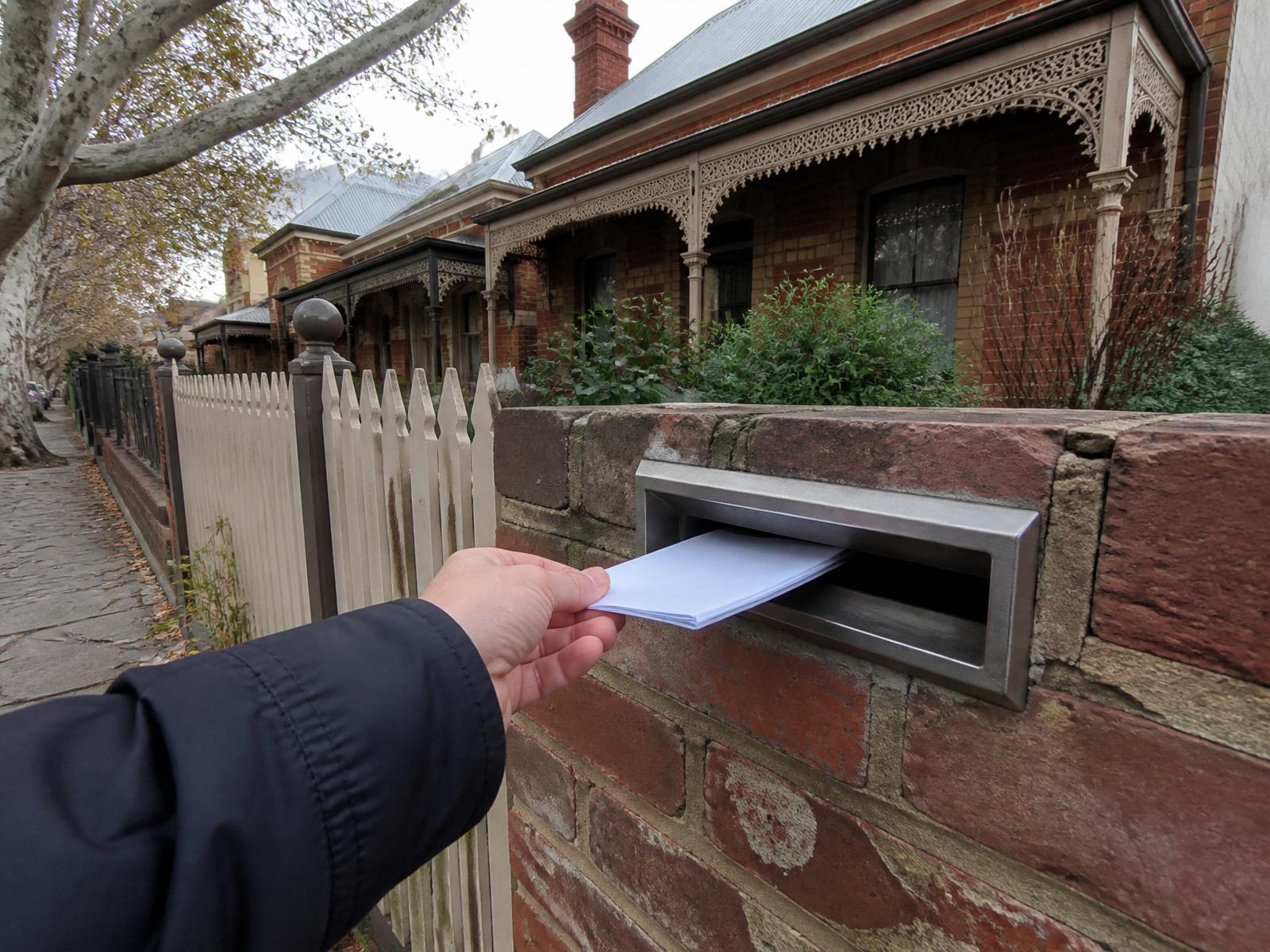
Once printed, a brochure moves through Melbourne exactly the way a flyer does. Letterbox distribution covers residential drops across metro Melbourne, hand-to-hand covers street-level and station distribution, and business drops covers reception desks and office buildings. The one practical difference is weight: a folded brochure is thicker than a flat flyer, which can nudge per-piece distribution cost up slightly at high volumes, since a walker's bag holds fewer of them per kilo.
Brochure Printing and Distribution Cost
Brochures generally cost more to produce than flyers, mainly because of the folding pass after printing and the heavier stock most brochures use to hold their shape cleanly. Distribution pricing follows the same rates as flyer distribution, with the weight consideration above factored in at scale. See current rates on the pricing page, or configure your brochure size, fold, and quantity in the quote builder.
Frequently asked questions
What's the difference between a brochure and a flyer?+
A flyer is a single flat sheet with one message. A brochure folds into multiple panels, giving room for more detail, photos, or a staged reveal as the reader opens it. Brochures suit content-heavy messages; flyers suit a single, immediate offer.
Which fold type should I use?+
Tri-fold is the standard choice for most business brochures, real estate listings, and service overviews. Bi-fold suits simpler content. Gate-fold suits a design built around a reveal or a larger cover image.
Can brochures be distributed the same way as flyers?+
Yes. Brochures go through the same letterbox, hand-to-hand, and business drop channels as flyers. The main practical difference is weight and bulk, since a folded brochure is thicker than a flat flyer, which can affect per-piece distribution cost at very high volumes.
Do brochures cost more to print than flyers?+
Generally yes, since a folded piece needs a folding pass after printing and often uses a heavier stock to hold its shape. Get an exact price for your specific size, fold, and quantity in the quote builder.
Ready to print and distribute?
Get an instant price for your brochure, printed and delivered across Melbourne.